
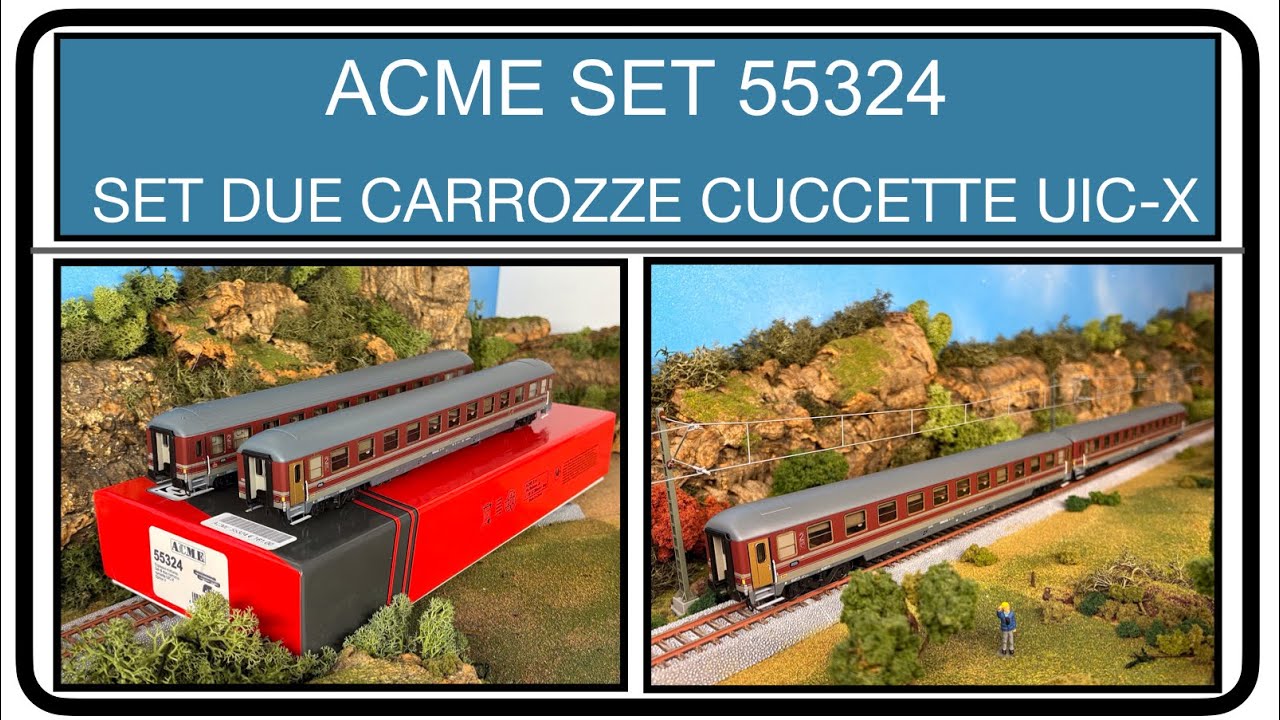
Los coches literas, llamados en italiano “Cuccette”, han sido ampliamente utilizados en los ferrocarriles italianos, sobre todo para los trenes que recorrían de norte a sur la península itálica. Estaban construidos sobre las bases de los coches UIC-X y se realizaron diferentes órdenes que dieron lugar a los diferentes tipos de coches. Hubo coches mixtos de primera y segunda clase y coches totalmente de segunda clase, que fueron mucho más numerosos. Durante la vida de estos coches literas han llevado las diversas libreas de los ferrocarriles italianos, desde el “Grigio Ardesia”, pasando al “Rosso Fegato” y finalmente las libreas más modernas como la “XMPR” y las sucesivas.
Las series originales eran:
* Cuccette Bcz ( coches literas de segunda clase ) disponían de 11 compartimentos, cada uno de ellos con 6 butacas en posición día y 6 literas en posición noche.
* Terza serie – Tipo 1968 – ( construidos entre 1968/70 ) 92 unidades y otras 160 en el 1970 y 30 en el 1973. Constituyendo la serie mas numerosa con 282 unidades.
* Quarta serie – Tipo 1970 – ( construídas entre 1973-75 ) 60 unidades
* Quinta serie – Tipo 1975 – ( construidas entre 1977-78 ) 30 unidades
* Sesta serie – Tipo 1979-82 – ( construidas entre 1981/82 ) 25 unidades y otras 150 entre el 1982 y 1985.
Los coches literas Bc Tipo 1975, 1979 y 1982 son similares, y la última serie es muy fácil de reconocer por el techo estriado, cosa que las dos primeras solo se pueden diferenciar por las matrículas.
Le carrozze a cuccette, sono state ampiamente utilizzate sulle ferrovie italiane, soprattutto per i treni che viaggiavano da nord a sud nella penisola italiana. Sono state costruite sulle base delle carrozze UIC-X e sono state effettuate diversi ordini che hanno dato origine ai diversi tipi di carrozze. C’erano vetture miste di prima e seconda classe e vetture totalmente di seconda classe, che erano molto più numerose. Durante la vita di queste carrozze a cuccette hanno portato le diverse livree delle ferrovie italiane, dal «Grigio Ardesia», passando per il «Rosso Fegato» e fino alle livree più moderne come la «XMPR» e le successive.
I tipi originali
* Cuccette Bcz (cuccette di 2°classe) 11 compartimenti, ciascuno dei quali con 6 posti a sedere in versione giorno e 6 cuccette in posizione.
* Terza serie – Tipo 1968 – (1968/70) 92 unità + (1970/73) 160+30 unità
* Quarta serie – Tipo 1970 – (1973-75) 60 unità
* Quinta serie – Tipo 1975 – (1977-78) 30 unità
Sesta serie – Tipo 1979-82 – (1981/82) 25 unità+ (1982-1985) 150 unità
Le Bc 1975, 1979 e 1982 sono simili – ma le ultime si riconoscono facilmente dal tetto: le 1982 lo hanno cannellato, mentre le prime due sono distinguibili credo solo dalla marcatura.
The bunk cars, called in Italian «Cuccette», have been widely used on Italian railways, especially in trains that travelled from north to south of the Italian peninsula. They were built on the bases of the UIC-X cars and different orders were made that gave rise to the different types of cars. There were mixed first and second class cars and full second class cars, which were much more numerous. During the life of these bunk cars they have carried the various liveries of the Italian railways, from the «Grigio Ardesia», passing to the «Rosso Fegato» and finally the most modern liveries such as the «XMPR» and subsequent ones.
The original series were:
– Cuccette Bcz (second-class bunk cars) had 11 compartments, each of them with 6 seats in day position and 6 bunk beds in night position.
– Third series – Type 1968 – (built between 1968/70) 92 units and another 160 in 1970 and 30 in 1973. Constituting the most numerous series with 282 units.
– Fourth series – Type 1970 – ( built between 1973-75 ) 60 units
– Fifth series – Type 1975 – ( built between 1977 – 78 30 units
– Sixth series – Type 1979-82 – ( built between 1981/82) 25 units and another 150 between 1982 and 1985.
The Bc Tipo 1975, 1979 and 1982 bunk cars are similar, and the last series is very easy to recognise by the striated roof, something that the first two can only be differentiated by the running numbers